
Changing press-on nail packaging for a reorder needs two decisions: which artwork the next order will use, and what happens to any packaging left from the previous version. Settle both in writing before authorizing new printing or packing.
A replacement logo file is only one part of that instruction. The order also needs to identify the affected designs, the quantities assigned to each packaging version, and the proof that will be used for approval. This guide focuses on that changeover. For the initial print brief, use our custom printed nail card guide.
Identify the change before sending another file
Start with the last approved artwork and mark what you want to change. A different brand name, corrected contact detail, revised instructions and a new background color raise different review questions. If the nail design, size mix or pack contents are also changing, list those separately. Otherwise an instruction intended for the card can quietly become an instruction for the whole set.
Keep one current proof filename in the order discussion. Archive the previous approved file with its approval date rather than deleting the reference. When two PDFs look similar, a document comparison tool can help locate changed text and images; Adobe explains its PDF comparison workflow. Comparing files helps review the edits. It does not prove that printed color, physical fit or the assembled pack is acceptable.
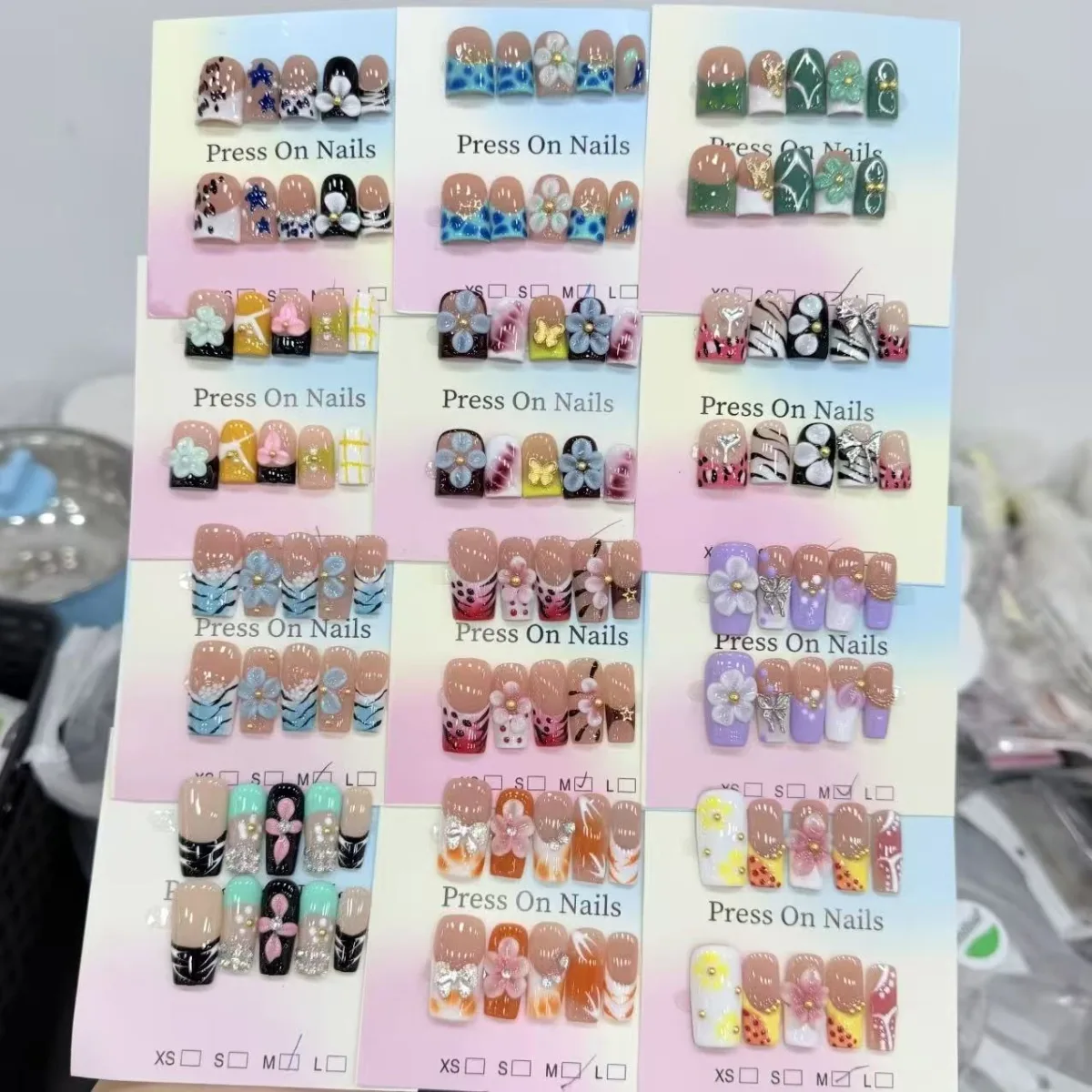
Count the old packaging separately from finished stock
Ask where the earlier packaging is held and what state it is in. Empty cards, assembled sets and goods already dispatched cannot be handled as one quantity. A usable count should distinguish:
- unused cards, boxes and inserts by artwork version;
- sets already packed in the earlier version;
- packaging allocated to another confirmed order;
- items awaiting a decision because the information may be wrong or no longer suitable.
Do not assume that packaging is stored by the supplier, belongs to the next order or can be reused without charge. Ask for the actual position. Holding, relabeling, repacking or disposing of materials may require a separate agreement.
If old information is inaccurate, keep the affected stock separate while the issue is reviewed. A replacement sticker is not automatically a suitable solution: its position may cover other information, and it may not suit the material or intended market. Confirm the proposed correction on the actual pack before approving its use.
Give each order line a packaging version
An instruction such as “use the new logo from now on” leaves the start point unclear. Name the order, design references and packaging revision that the instruction covers. If both versions will be used, allocate a quantity to each and state whether they must be packed or identified separately.
For the next purchase order, state whether only the revised card may be used and whether earlier cards must stay on hold. If you want the remaining earlier cards used for a different order, identify that order and the permitted quantity. Keep the allocation explicit even when the nail design is unchanged.
The wholesale reorder checklist covers the wider product and quantity review. Keep the artwork change attached to that order record so the packing instruction and the quotation point to the same version.
Review the parts of the pack that the change affects
A spelling correction needs careful text review. Moving a logo or changing the card layout also needs a check with the nail set mounted, because the product can cover part of the print. A different material, finish, box structure or insert calls for a physical review of the affected configuration.
Ask what proof is needed for the particular revision and what it will cost. Do not treat a screen image as confirmation of paper feel, fold behavior or fit. Use the packaging proof checklist for the physical and assembled-pack checks, then record the scope of the approval: artwork, material, fit, or the complete pack.
Keep product identifiers in the review as well. A supplier reference, your internal SKU and a retail barcode serve different purposes. If the change affects brand identity or product information, review whether the assigned retail identifier is still appropriate instead of copying the previous barcode by habit. GS1 explains who normally assigns GTINs. Use the relevant GS1 rules and any retailer requirements for the actual change; an artwork revision number alone does not answer that question.
Confirm the cost and timing of the changeover
Request a revised quotation that separates new printing, any agreed proof work, handling of earlier packaging and freight. Ask which production steps have already started and whether the proposed revision can still be made. Do not assume that an earlier price or lead time includes the new work.
Before approving the run, reconcile the quantities: how many nail sets need the revised presentation, how many usable packaging components are already allocated, and how many new components are required. Allow for spare components only when that quantity has been agreed. Packaging quantities and nail-design quantities are separate questions, as explained in our private-label buying terms.
Copy this changeover record into your inquiry
Use this suggested worksheet to prepare your change request. Replace each field with confirmed information and leave unresolved items visibly open.
- Previous order and design references:
- Earlier approved artwork filename and date:
- Proposed artwork filename and revision:
- Exact text, image, material or structure changes:
- Nail specification and pack contents: unchanged / changes listed separately:
- Earlier empty packaging: location, version and counted quantity:
- Earlier finished sets: location and counted quantity:
- Decision requested for earlier packaging: hold / use for a named order / proposed correction / other:
- New order: quantity per design and packaging version:
- Proof required and items still awaiting approval:
- Revised costs and confirmed production or dispatch dates:
- Person approving the change and written approval date:
Send the current artwork, the previous approved reference and quantities through the packaging and branding inquiry. If the nail design is changing too, say so explicitly. One clear changeover instruction is more useful than several attachments whose approval status is uncertain.