
If you change press-on nail suppliers, keep the old size chart provisional until you have compared a retained retail set with the new supplier’s finished sample. Match each tip by measured width, shape, length and curve, then pack the candidate set in your current card or tray. Reuse the existing chart only when the sample fits the same way and the packed set still matches what customers are shown.
Give the new supplier a physical reference
Choose one active design you want to move first. Keep a labeled set from the stock customers currently receive, its size chart, its packaging and any fitting kit sold with it. Note the shape, length and set configuration. If you sell separate S and M packs, record the contents of each. If you sell one mixed-size pack, count the pieces for each tip size.
Ask the new supplier which of those details their sample will represent. A color sample on a different base can settle the color question while leaving fit open. A loose tip can help you check a profile, but you still need the proposed size mix to decide whether the retail set can replace the original.
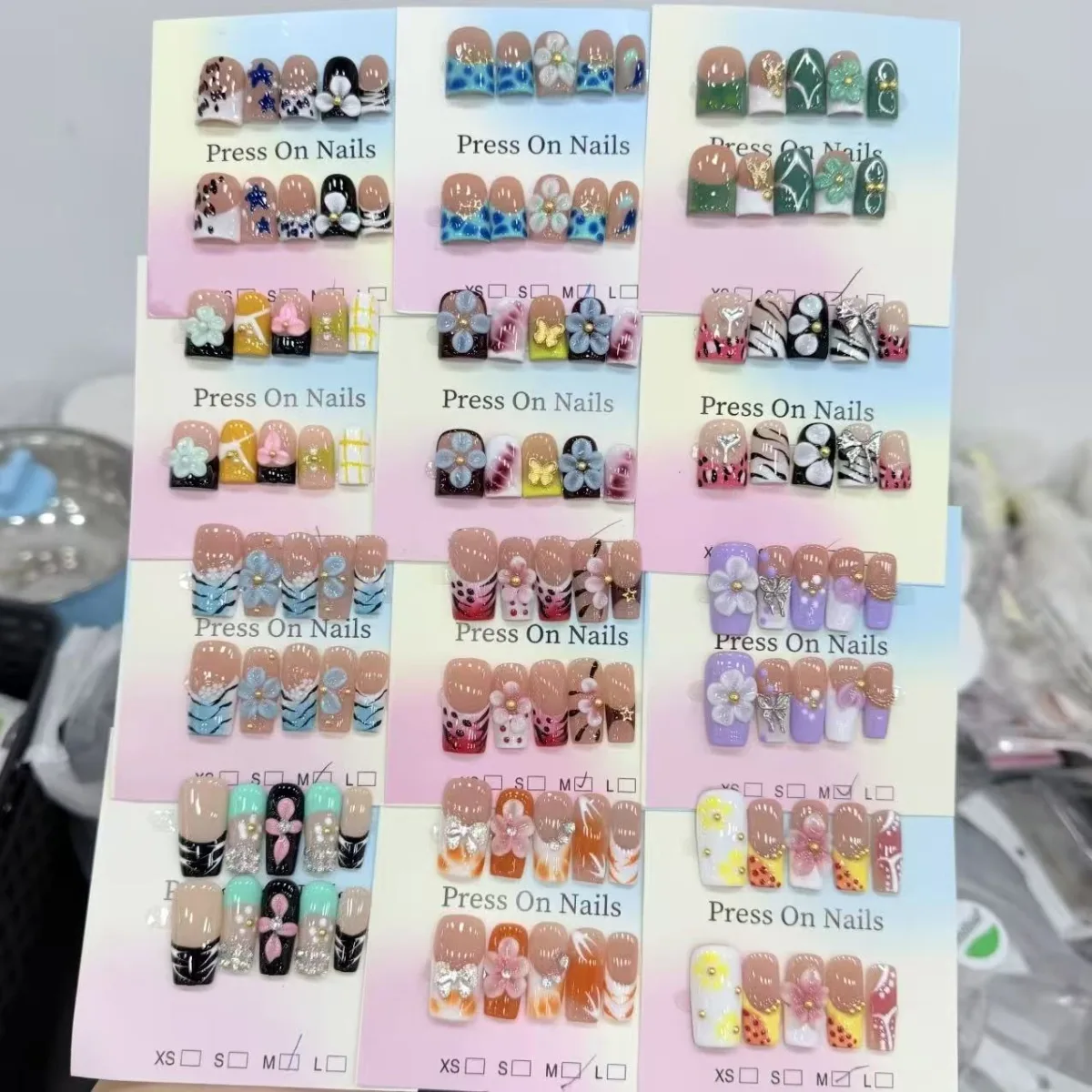
These SENAILGLOBAL sample cards show how a set can be arranged and marked by size. The photo is a display reference. A checked M box gives you a label to record, while dimensions and fit still need to be checked on the actual tips.
Build a crosswalk from old tip to candidate tip
For each size you intend to sell, pair the old tip with its closest candidate and write down both suppliers’ codes. Compare them in the same orientation. Record widths in millimeters at the same point on the tip using the same method. A straight edge-to-edge reading and a reading taken along the curved surface describe different measurements. Confirm which convention each chart uses before comparing the numbers. Use the same start and end points for length, too.
Look at the cuticle outline from above and the curve and sidewalls from the end. Check how the two samples sit on the same fit reference without adhesive or added pressure. A matching width still leaves room for a difference in curve or edge coverage. Save top and end views with both sample IDs visible. Record a missing match as open instead of choosing a candidate from its size number alone.
The Matchy Nails sizing guide gives priority to the chart for the specific product and separates shape and length from fit. For your own line, link the old chart to the old sample and the proposed chart to the new one. If customers already have a sizing kit, check its tips against the finished replacement before telling them their saved size still applies.
Pack a complete set before releasing the old artwork
Place the candidate tips on the actual backing card or in the tray you plan to use. Check the position labels, pieces per size and whether the longest tip or tallest decoration touches the cover. Close the package with the agreed accessories inside. A package that closes empty can behave differently when it contains the full set.
Then check the listing and printed instructions against the sample. Can a repeat customer choose the same size from the same chart and receive the set shown? If the tip code changes internally but the chart, fit and pack-out all pass, document the code crosswalk. If an old M now sits differently, leave that comparison open or review it as a revised product. While the decision is open, keep old and new stock distinguishable in picking records so staff can tell which version they are sending.
Record what passed before placing the bulk order
Use one record per design and pack configuration. For each line, record the old reference, the candidate reference, what you observed and who confirmed the decision.
- Retail design and pack size: ___
- Retained set and candidate sample IDs: ___
- Old tip code → candidate tip code, width method and widths in mm: ___
- Length, curve, sidewall coverage and fit check: ___
- Pieces per size, card/tray revision and closed-pack result: ___
- Chart, fitting kit or listing version affected: ___
- Decision: approve against the existing specification, review as a revision, or hold for a new sample.
- Date, reviewer, first order or lot covered, and open items: ___
For example, imagine the new M thumb tip has the same measured width but a deeper curve and sits differently on the reference. Leave that row open even if the color is approved. Ask for an alternative base or agree how the revised fit will be presented before combining inventory under the old listing. Carry the approved sample reference into the product specification sheet so the first order can be checked against it on receipt.
Request a sample that answers the fit question
If you are evaluating a new source for an existing line, review SENAILGLOBAL’s wholesale press-on nail sourcing options. In the catalog and sample inquiry, send the retained set reference, shape and length, sizes to compare, your packaging revision and expected quantities per design. Ask which tips will be included in the proposed sample and whether a complete packaged set can be reviewed separately. This gives you a clear basis for deciding what can carry over.